
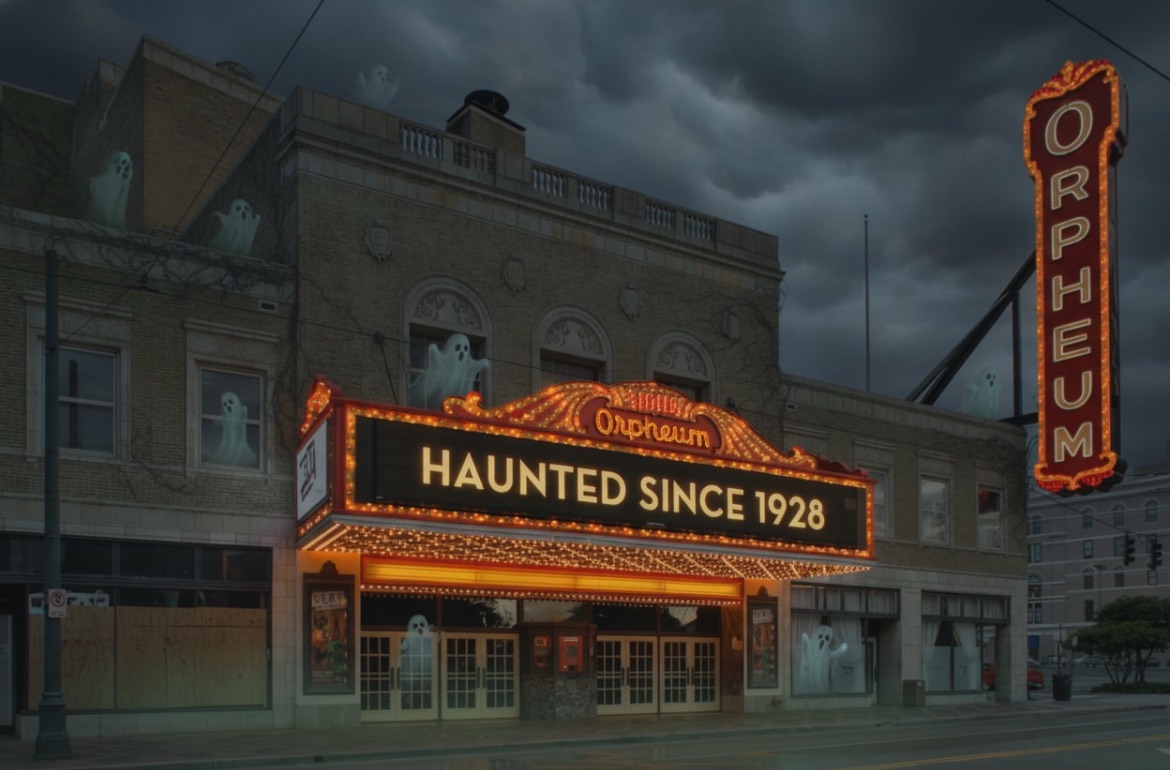
When the curtain falls at the Orpheum Theatre, the show doesn’t always end.
In Memphis, the city where music haunts every note and history hums in every brick, no stage carries more whispers, legends, and ghost stories than the Orpheum.
Most Memphians know her name as Mary, the little girl who never stopped attending the theater she loved. But the Orpheum’s supernatural cast list goes far beyond one spirit. For nearly a century, this golden palace has been a crossroads for laughter, heartbreak, and, some say, the restless echoes of lives cut short.
The Grand Lady of Beale Street
The Orpheum’s story began long before its famous ghosts arrived.
The original Grand Opera House opened on the same site in 1890, when Memphis was rebuilding itself after yellow fever epidemics and economic despair. It was a lavish, marble-columned symbol of the city’s rebirth — a place where locals could forget their troubles for an evening of music, vaudeville, and magic.

But in 1923, that original theater was destroyed by fire. Witnesses described a furious blaze that consumed the building in hours. Miraculously, no one was killed — or so the papers said.

Within five years, the Orpheum Theatre rose from the ashes. When it opened in 1928, it was grander than ever: gold leaf ceilings, crystal chandeliers, red velvet seats, and an ornate Wurlitzer organ that still fills the room with sound. For decades, it became a centerpiece of Memphis entertainment.
And if you believe the stories — some of the people who first loved the Orpheum never really left.
Mary, Seat C-5
The most famous of the Orpheum’s spirits is Mary, a little girl said to be around 12 years old.
According to legend, Mary was hit by a streetcar outside the theater in the 1920s while running across Beale Street, perhaps on her way to see a show. Her death was never officially documented, but sightings of a small girl in a white dress began soon after.
Patrons and staff say she appears in the balcony, usually around seat C-5, her favorite spot. The theater even leaves that seat unsold — a permanent invitation for her to attend.
Those who have seen her describe a polite, curious child. Sometimes she giggles during performances; other times, she moves quietly through the aisles, her braided hair catching the dim glow of the stage lights.
Stagehands have found heavy props mysteriously shifted overnight, doors opening and closing on their own, and cold drafts moving through rooms where no vents exist. During a performance of Annie, a full-sized dollhouse prop was somehow moved from backstage to the balcony between shows — an impossible task for one person. The crew joked that “Mary must have wanted to play.”
One of the most chilling encounters came from a very credible witness: the wife of Orpheum president Brett Batterson. During a show, she sat in a private box believed to be Mary’s favorite seat. Halfway through the performance, she felt a firm tap-tap-tap on her shoulder — and turned to find no one there.
The Other Ghosts of the Orpheum
While Mary gets most of the attention, she isn’t alone.
For decades, theater employees have whispered about “Eleanor,” a weeping woman who lingers in the upper balcony. Some say she was an actress who died tragically, while others think she’s tied to the 1923 fire that destroyed the original opera house. Patrons sitting alone during matinees sometimes report the sound of soft crying nearby, followed by a sudden chill.
There’s also talk of a man in a tuxedo who appears briefly in the lobby mirrors, tipping his hat before vanishing. Custodians have seen shadows dart across the stage when the lights are out and felt invisible figures brush past them in the orchestra pit.
During one after-hours tour, a Memphis ghost investigator caught an unexplained voice on a recorder whispering, “Play it again.” The Wurlitzer organ — which hadn’t been touched in hours — let out a single note seconds later.
A Living Theater with a Life Beyond
What makes the Orpheum’s hauntings so powerful isn’t fear — it’s reverence. The people who claim to have seen its ghosts often describe them as peaceful, even protective.
“I think they just love the theater too much to leave,” one longtime usher said. “Mary, Eleanor, whoever they are — they’re part of the family.”
The Orpheum leans into its history gracefully. It still hosts performances year-round — from Broadway tours to symphonies to the annual Orpheum Ghost Tours, where guides retell the legends under flickering chandeliers. Every October, hundreds of Memphians walk those velvet aisles hoping for a glimpse of the city’s most famous ghost.
And sometimes, they get more than a glimpse.
More Than a Ghost Story
Whether you believe or not, the Orpheum’s haunting says something about Memphis itself — a city that refuses to let its past disappear. The same way the blues still hum from Beale Street and the spirit of Elvis still echoes through Graceland, the Orpheum’s ghosts are part of the city’s living memory.
The theater has burned down, been rebuilt, nearly closed, and always come back stronger. Maybe that’s why its ghosts linger. They’re reminders that beauty, like the soul of this city, can’t be destroyed.
So the next time you settle into your seat as the lights dim and the orchestra starts to play, glance toward the balcony. If you see seat C-5 unoccupied, don’t worry — it’s already taken.
💀 Read more Haunted Memphis stories at ThisIsMemphis.co
#HauntedMemphis #ThisIsMemphis #MemphisHistory #GhostStories #901Legends

Leave a Reply